 Whalesbook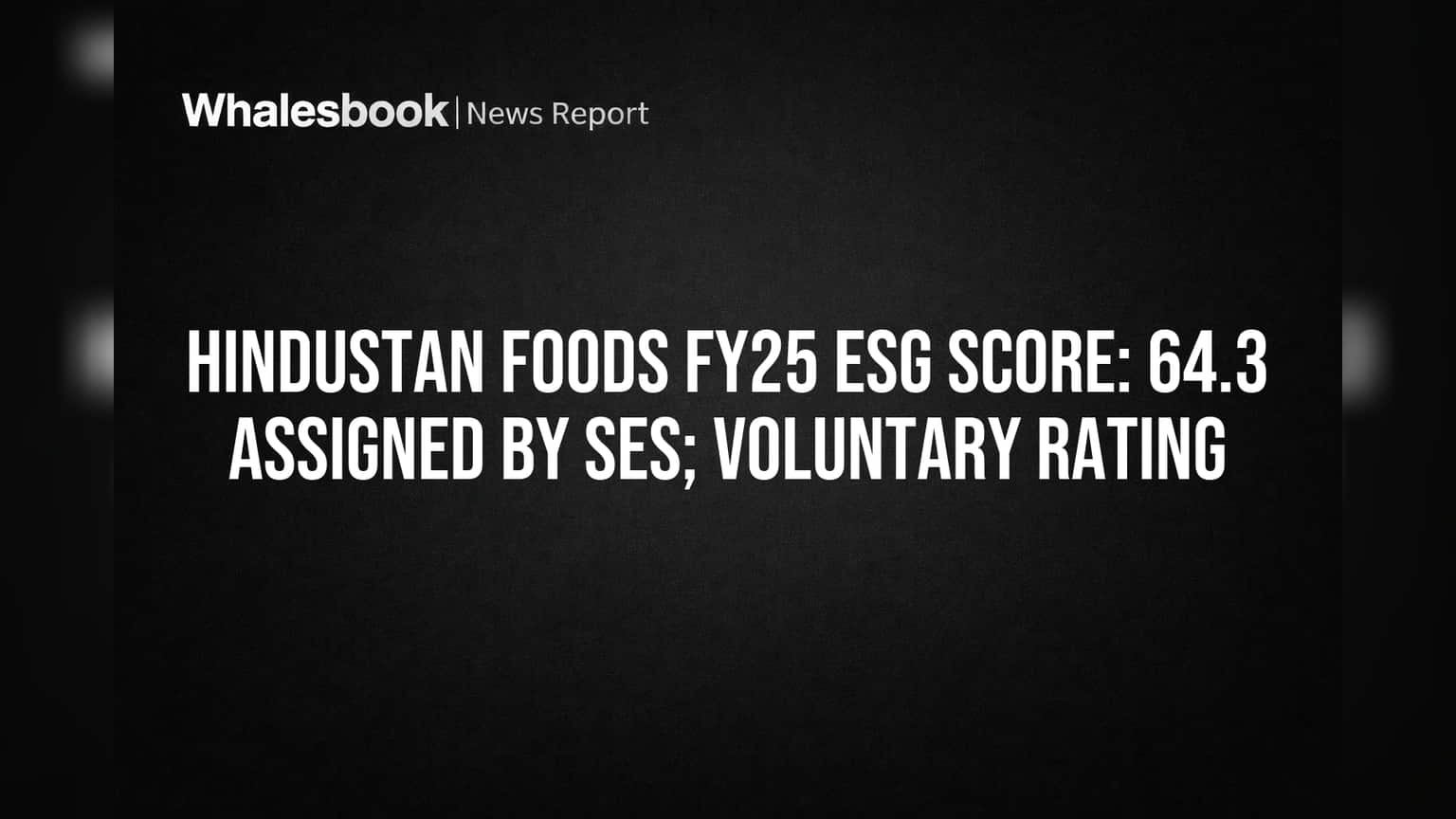


SES ESG Research Private Limited, a SEBI-registered ESG Rating Provider, assigned the score of 64.3 for Hindustan Foods Limited (HFL) for FY2024-25. The rating was determined independently and solely from publicly available disclosures, without any prior engagement or request from HFL. SES used its established methodology, designed to align with BRSR reporting standards and global ESG practices.
ESG ratings are increasingly important for investors seeking to make informed decisions. A strong score can signal a company's commitment to sustainability, potentially attracting responsible investors and influencing valuations. Although HFL did not pursue this rating, its assignment indicates that the company's public disclosures are transparent enough for an independent assessment.
Hindustan Foods is a major contract manufacturer in India for leading FMCG brands, producing items across personal care, home care, food, beverages, and leather goods. Its business model is strictly B2B, manufacturing for clients rather than owning brands. HFL engages in CSR initiatives focused on education, health, and environmental conservation, and emphasizes its commitment to sustainability through renewable energy use and diversification into waste management. SES ESG Research, the rating agency, is a subsidiary of Stakeholders Empowerment Services and is regulated by SEBI.
This voluntary ESG score offers a baseline for assessing HFL's current public transparency on sustainability. It provides a starting point for investors evaluating the company's ESG profile. Moving forward, investors will likely observe HFL's reaction to the rating and how it integrates ESG considerations into future strategies and reporting. The rating's voluntary basis means it may not fully reflect the company's internal ESG commitments or performance.
Hindustan Foods has encountered past regulatory challenges. The company is contesting a ₹4.95 crore tax demand related to FY2019-20. Additionally, HFL settled with SEBI for ₹24.32 lakh in October 2023 concerning prior non-compliance issues, and has faced GST demand orders. Furthermore, HFL's contract manufacturing model inherently involves thin profit margins, high debt, and a limited competitive advantage, increasing susceptibility to financial shocks.
In the FMCG sector, peers such as Marico Limited have attained higher ESG ratings, including dual A-CDP ratings and a score of 78 from NSE ESG, placing them at the top of the sector. Industry studies suggest that Indian FMCG companies typically prioritize governance and social factors, with environmental considerations sometimes receiving less emphasis.
Investors will likely monitor HFL's proactive engagement with ESG ratings and its future disclosures. Key indicators will include upcoming sustainability reports and detailed ESG performance updates. Developments regarding the tax demand orders and past SEBI non-compliance issues should also be tracked, alongside assessments of how HFL's ESG performance compares to its stated commitments and industry peers.