 Whalesbook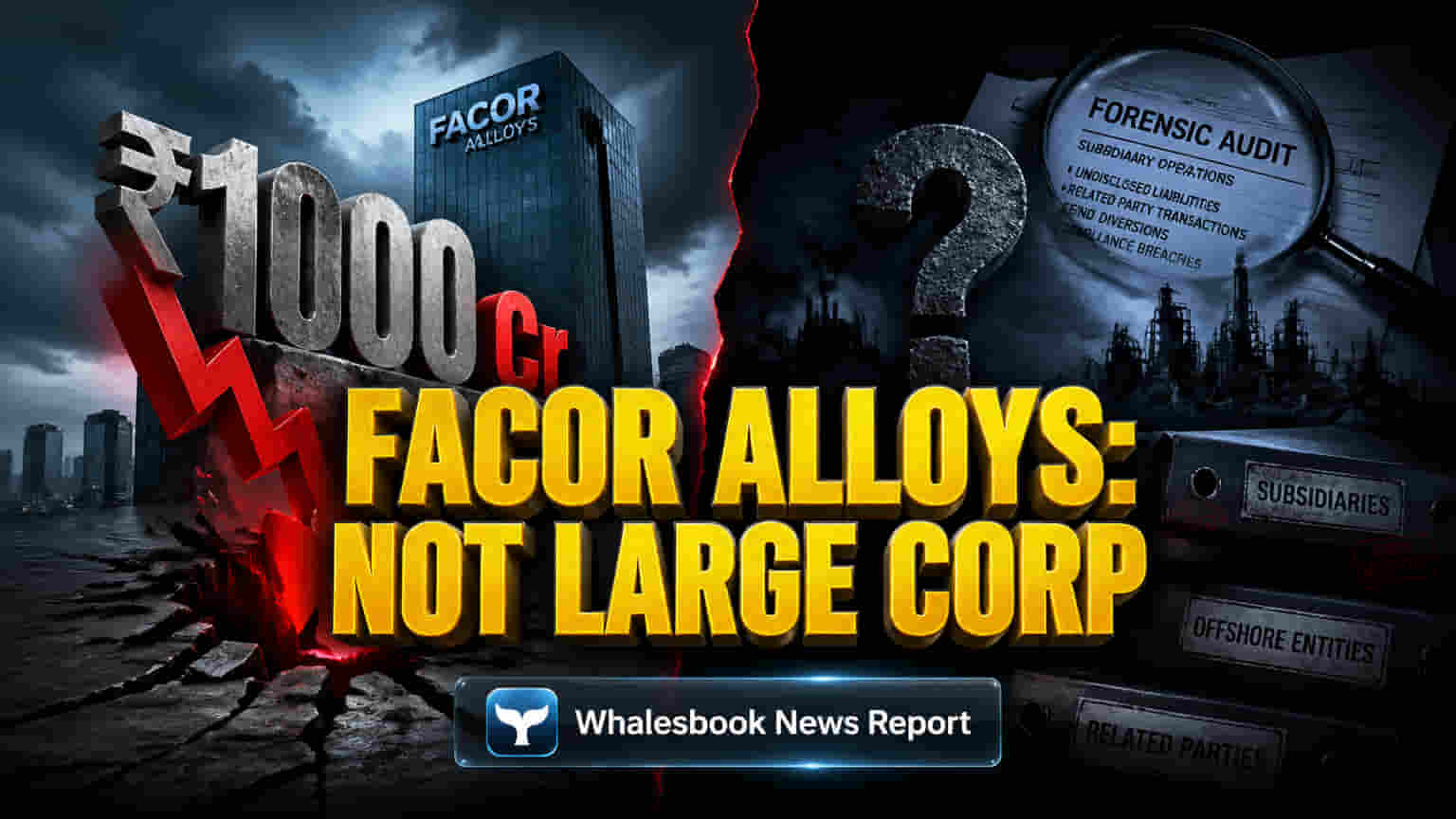


Facor Alloys Clarifies Regulatory Status
Facor Alloys Limited has confirmed it is not classified as a 'Large Corporate' under Securities and Exchange Board of India (SEBI) regulations. This status is due to its long-term borrowings remaining below the ₹1,000 crore threshold as of March 31, 2026. The company's clarification provides transparency regarding its regulatory standing and future fundraising capabilities.
Facor Alloys Details Regulatory Classification
The company formally communicated its regulatory classification to stock exchanges. This confirms Facor Alloys does not meet the criteria for a 'Large Corporate' designation under SEBI rules, which require outstanding long-term borrowings to exceed ₹1,000 crore. The company cited relevant SEBI circulars issued on November 26, 2018, October 19, 2023, and August 10, 2021, detailing these requirements. This provides clear transparency on the company's financial standing and its capital market obligations.
Implications for Fundraising
SEBI's 'Large Corporate' rules typically involve stricter disclosure norms and specific fundraising requirements, especially for debt issuance. By remaining outside this classification, Facor Alloys could maintain greater flexibility in its future borrowing plans. This distinction helps the company potentially streamline access to capital markets without facing the more stringent conditions imposed on larger entities.
Background on SEBI Rules and Company Debt
SEBI first introduced 'Large Corporate' norms, which previously required entities with over ₹100 crore in long-term borrowings and an 'AA' rating to raise debt partly through bonds. However, the definition and thresholds have been updated. Recent changes, particularly by May 2024, raised the minimum outstanding long-term borrowing threshold to ₹1,000 crore for an entity to be classified as a 'Large Corporate'. Facor Alloys' long-term debt has been declining, with associated interest expenses also reducing significantly. By March 2025, its total long-term debt was reported as nil, well below the ₹1,000 crore threshold.
Ongoing Concerns
Despite this regulatory clarity, Facor Alloys faces significant ongoing concerns. In August 2024, the company initiated a forensic audit to investigate potential fraud and fund siphoning by past management at its Dutch and Turkish subsidiaries. The company has also experienced operational challenges, including temporary plant shutdowns in the recent past.
Key Changes Following Clarification
- Regulatory Status: Facor Alloys is confirmed to be outside the scope of SEBI's 'Large Corporate' debt-issuance regulations.
- Fundraising: The company may face fewer disclosure requirements and gain greater flexibility for future debt-funded projects.
- Investor Insight: Shareholders receive clearer insight into the company's immediate regulatory standing regarding its borrowing capacity.
Key Risks Facing Facor Alloys
- Forensic Audit: The ongoing forensic audit into alleged fraud at its subsidiaries creates a significant overhang, carrying potential legal and financial repercussions.
- Financial Performance: The company has shown weak revenue and profit growth over the past three years, accompanied by a low interest coverage ratio.
- Promoter Pledge: A high promoter pledge level of 70.91% presents a notable risk for minority shareholders.
- Operational Vulnerabilities: Past temporary plant shutdowns highlight operational risks that could affect future performance.
Comparison with Industry Peers
Facor Alloys operates in India's ferro-alloy sector, alongside established companies such as Indian Metals & Ferro Alloys Ltd (IMFA) and Maithan Alloys Ltd. While these peers are key suppliers to the steelmaking industry, specific comparative data on their 'Large Corporate' status or current debt levels relative to the ₹1,000 crore threshold is not readily available.
Outlook and What to Watch
Investors will be closely monitoring several key developments:
- Forensic Audit: The outcome and implications of the ongoing forensic audit into subsidiary operations are critical.
- Operations: Progress in resuming operations after past shutdowns and ensuring stable production.
- Debt Levels: Future disclosures tracking any significant changes in long-term borrowings that could approach the 'Large Corporate' threshold.
- Financial Health: Signs of improvement in revenue, profit growth, and operational efficiency.
- SEBI Rules: Any further changes or clarifications in SEBI's 'Large Corporate' framework.