 Whalesbook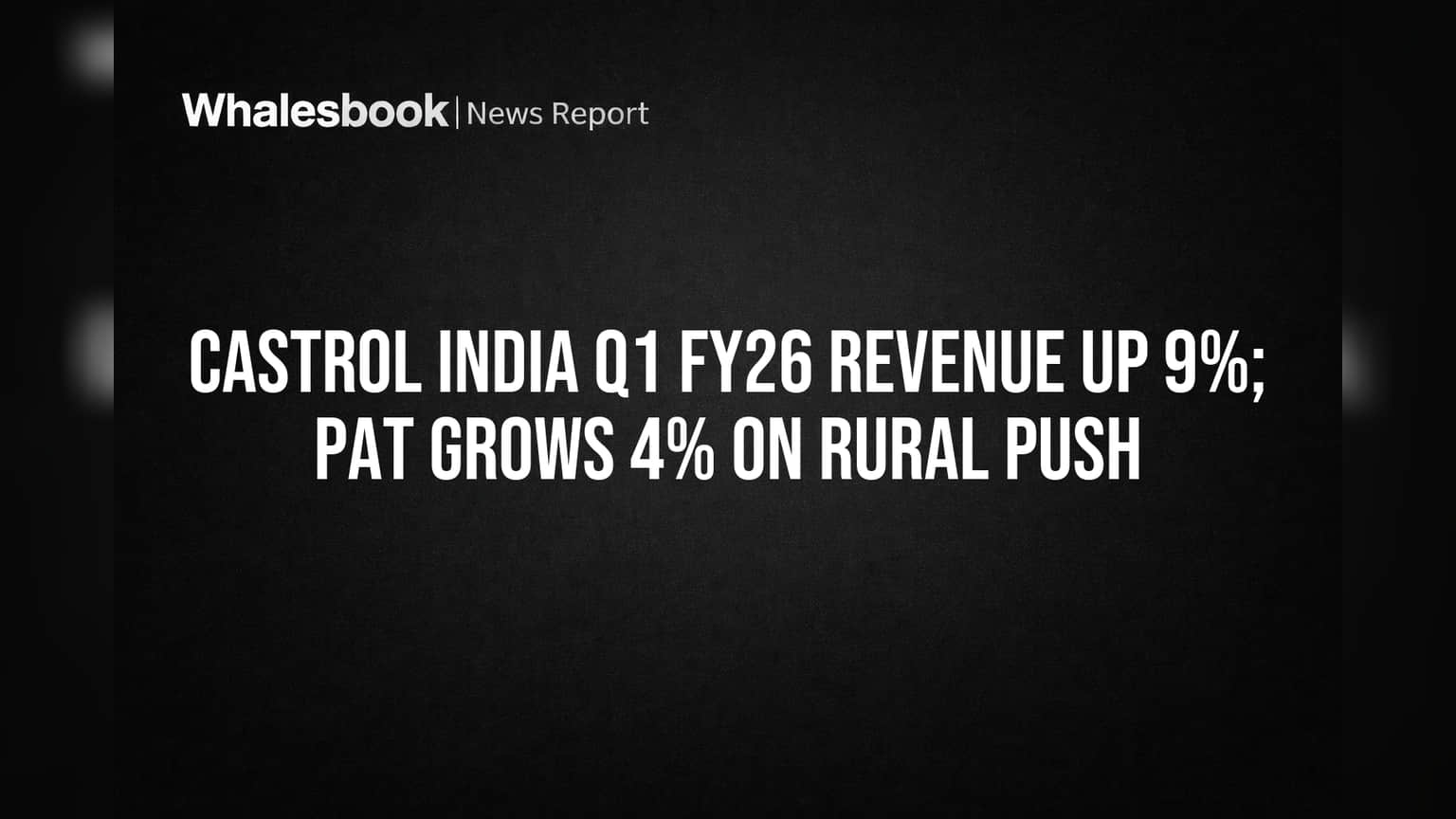


Q1 FY26 Financial Results
Castrol India announced its financial results for the first quarter of FY26, showing strong revenue growth and steady profit. Revenue from operations rose 9% year-on-year to ₹1,545 crore, up from ₹1,422 crore in the same period last year. The company also reported a 7% increase in EBITDA, reaching ₹329 crore.
Profit After Tax (PAT) saw a 4% increase, settling at ₹242 crore for the quarter, compared to ₹233 crore in Q1 FY25. Castrol India credited the results to expanding its rural reach and strengthening its portfolio of premium brands.
Key Drivers of Growth
The company's performance highlights its successful strategy in rural markets, which experienced double-digit growth. Combined with a focus on premium products and increased urban distribution, this led to strong volume and value growth.
The industrial segment also showed double-digit growth, helping Castrol India secure market share. An MoU with HPCL to explore a re-refined base oil ecosystem hints at future diversification potential.
Parent Company Deal & Local Strategy
Globally, Castrol's parent BP agreed in late 2025 to sell a 65% stake in its lubricants business to Stonepeak for about $10.1 billion. The deal, expected to close by end-2026, will form a joint venture where BP holds 35%.
In India, Castrol India has focused on expanding rural distribution and enhancing its industrial segment. This strategy has driven consistent high single-digit to double-digit growth over recent quarters.
Meanwhile, new consolidated labor codes in India, implemented around November 2025, introduce significant compliance and potential cost changes that companies are assessing.
Strategic Focus Areas
Castrol India plans to continue using its expanded rural distribution network, which has seen strong double-digit growth, to reach underserved markets.
The company's focus on premium brands is expected to drive higher value growth, supported by more urban distribution.
Castrol India aims to maintain double-digit growth in its industrial segment by offering customized solutions.
Investors will monitor the progress of BP's sale of its majority stake in Castrol's global business, as it could affect Castrol India's future strategy.
The company is assessing the financial impact of India's new Labour Codes on its operations.
Potential Challenges
External economic challenges, including volatile currency and rising raw material costs due to geopolitical events, threaten profitability.
Navigating inflation requires careful cost management and pricing.
The integration of Castrol's global lubricants business sale to Stonepeak could bring operational and strategic questions.
The impact of the new Indian Labour Codes on operational costs and HR policies must be managed.
Competitive Landscape
Castrol India operates in a competitive market. Peers include Indian Oil Corporation Ltd (IOCL), which recorded its highest-ever sales of 855 TMT for its lubricants division (Servo) in FY26. Gulf Oil Lubricants India Ltd is another competitor, reporting strong double-digit topline growth and outperforming industry volume growth by 2x in Q3 FY26.
Market Outlook
The India lubricants market is projected to grow from $5.60 billion in 2025 to $5.77 billion in 2026, with a compound annual growth rate (CAGR) of 3.12% expected through 2031.
Key Investor Focus Points
Monitoring Labour Code Implementation: Investors will watch final rules for India's new Labour Codes and Castrol India's assessment of their financial impact.
Tracking BP's Stake Sale: Approvals and completion of the 65% stake sale to Stonepeak by end-2026 are key.
Managing Economic Pressures: How Castrol India manages pricing, costs, and supply chains against economic challenges will be watched.
Continued Rural and Industrial Growth: Updates on performance in rural and industrial segments are key indicators.