

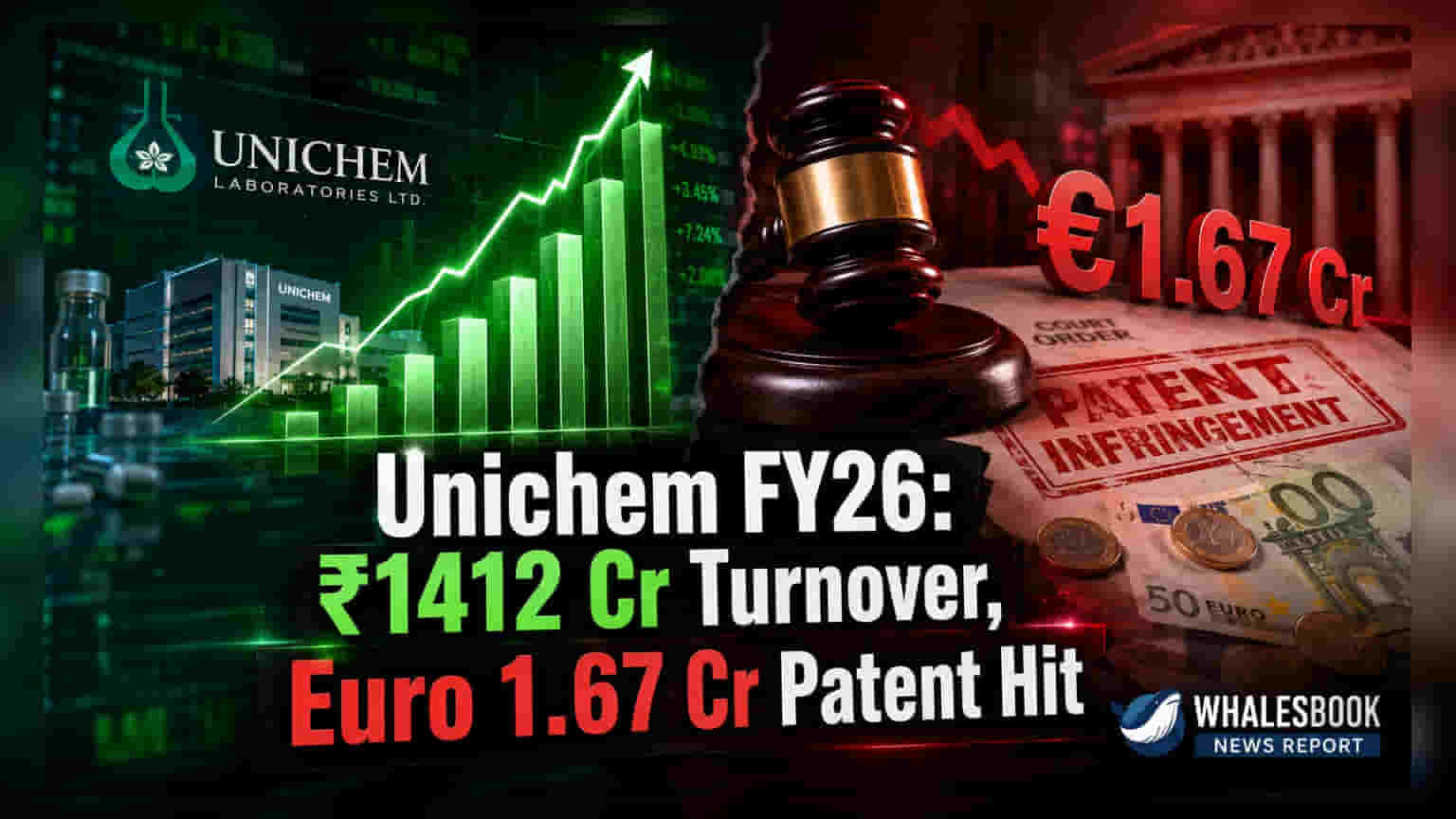
Unichem Laboratories reported FY26 turnover of ₹1,412 crore and a net worth of ₹2,627 crore. The company paid Euro 16.75 million for a patent dispute. Three product recalls also occurred in FY26.
Unichem Laboratories Reports FY26 Turnover of ₹1,412 Crore, Pays Euro 16.75 Million Patent Penalty
Unichem Laboratories reported a turnover of ₹1,412.29 crore and a net worth of ₹2,627.10 crore for the fiscal year 2026. The company made a significant payment of Euro 16,753,873.4 (approximately ₹150 crore based on current exchange rates) due to a patent dispute resolution with the EU Commission related to a 2005 perindopril patent.
Reader Takeaway: Strong export focus and sustainability gains are balanced by a one-time patent payment and product recall concerns.
What just happened
Unichem Laboratories has disclosed its financial and operational performance for FY 2026. Key figures include a turnover of ₹1,412.29 crore and a net worth of ₹2,627.10 crore. The company operates six plants and one R&D center in India, with five international offices. A major financial event was the payment of Euro 16,753,873.4 to settle a patent dispute with the EU Commission stemming from a 2005 perindopril patent.
Why this matters
This disclosure provides investors with a snapshot of the company's financial health and operational status. The high export contribution (97.6% of turnover) highlights its global market reliance. The substantial payment for the patent dispute represents a one-time financial impact, while the three voluntary product recalls (Cyclobenzaprine HCl, Doxazosin Tablets, Bisoprolol Fumarate & HCT) raise questions about quality control processes.
The backstory
Unichem Laboratories is an established pharmaceutical company with a significant international presence. The patent dispute payment relates to a legacy issue from 2005, indicating a long-standing legal matter that has now been settled. The company has been actively working on sustainability initiatives, with targets set for effluent recycling, waste management, and emissions reduction.
What changes now
While the patent payment is a one-time event, its magnitude will affect the company's cash flow for FY26. The product recalls require management to demonstrate effective corrective actions to prevent recurrence and maintain market trust. Progress on sustainability goals, such as recycling 84% of treated effluent and reducing emissions by 26%, showcases positive operational developments.
Risks to watch
The primary risks for investors include potential quality control lapses indicated by the product recalls, which could impact brand reputation and sales. The heavy reliance on exports also exposes the company to international market fluctuations and regulatory changes. The one-time cash outflow from the patent dispute needs to be absorbed without significantly straining financial operations.
Peer comparison
While specific peer data for FY26 is not provided in the filing, Unichem operates in a highly competitive generic pharmaceutical market. Companies like Sun Pharmaceutical Industries, Cipla, and Dr. Reddy's Laboratories are major players with global footprints. Unichem's high export percentage positions it similarly to many Indian pharma companies focused on regulated markets like the US and Europe.
Context metrics (time-bound)
- FY 2026 Turnover: ₹1,412.29 crore
- FY 2026 Net Worth: ₹2,627.10 crore
- FY 2026 Export Contribution: 97.6% of turnover
- FY 2026 Patent Dispute Payment: Euro 16,753,873.4
- FY 2026 Total Employees: 1,907
- Effluent recycled/reused (FY26): 84%
- Waste managed via co-processing/recycling (FY26): 53%
- Scope 1 & 2 emissions reduction (vs baseline): 26%
What to track next
Investors should monitor the company's efforts to strengthen quality control measures and ensure no further product recalls occur. Tracking the impact of the patent payment on profitability and cash reserves will be crucial. Continued progress on sustainability targets, particularly waste management and emission reduction goals for FY28 and FY30, will also be important indicators.