 Whalesbook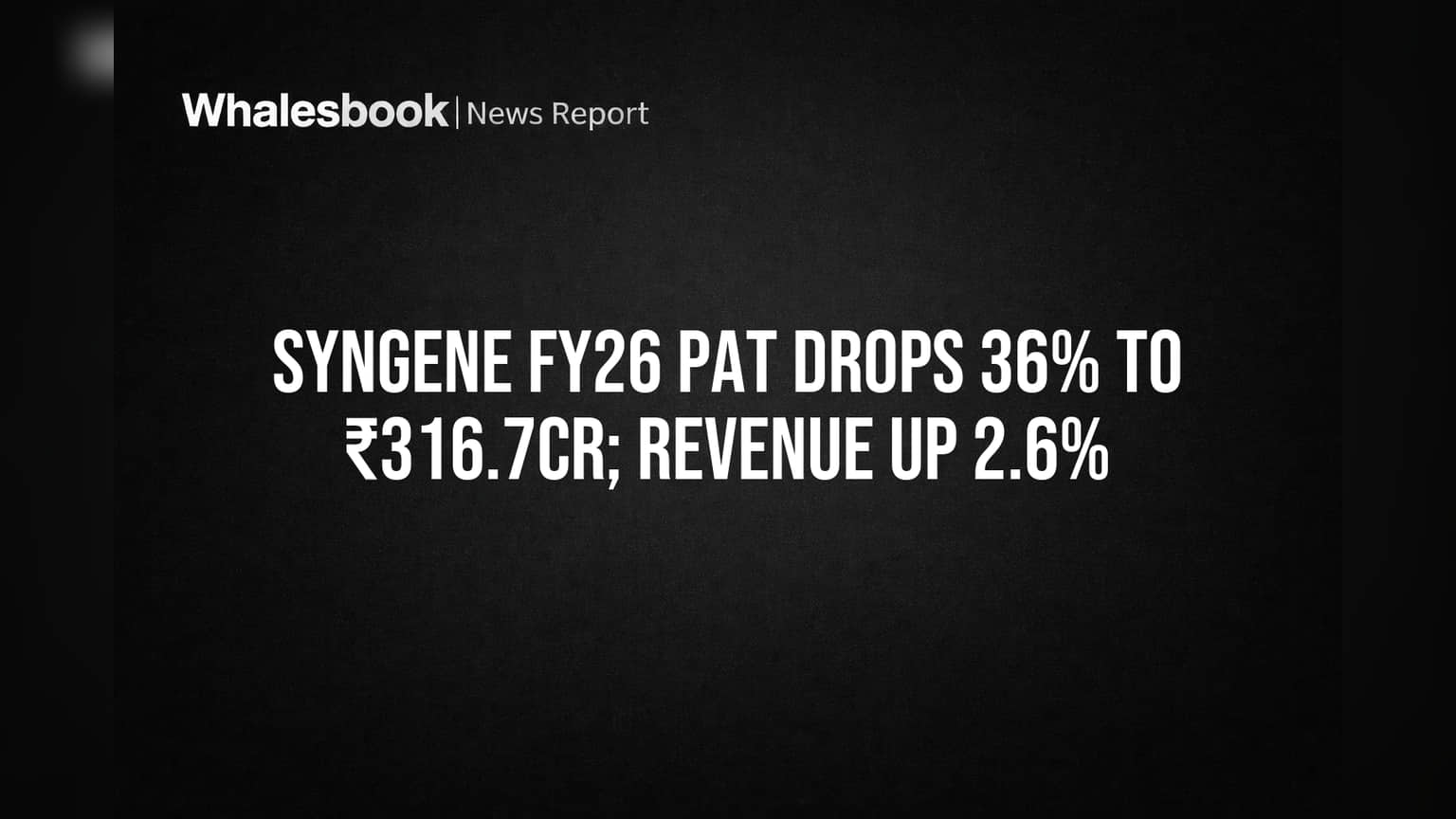


Syngene's FY26 Profit Dips 36% Despite Revenue Growth
Syngene International's profit after tax for fiscal year 2026 fell sharply by 36.2% to Rs 3,167 million. This decline occurred even as consolidated revenue edged up 2.6% to Rs 38,094 million. The results point to profit margins being squeezed despite steady revenue gains.
Financial Results Unpacked
Syngene International's Board of Directors approved the audited financial results for the fiscal year ended March 31, 2026, on April 29, 2026. Consolidated profit after tax (PAT) for FY26 plunged to Rs 3,167 million, down from Rs 4,962 million in FY25. Standalone PAT also decreased, from Rs 4,680 million in the prior year to Rs 3,049 million.
Why This Matters
The significant drop in profitability raises questions about the company's cost management and pricing strategies. Despite the profit squeeze, the board has recommended a final dividend of Rs 1.25 per equity share for FY25-26, suggesting underlying confidence or a commitment to shareholder returns.
The Backstory
Syngene operates as a leading Indian Contract Research, Development, and Manufacturing Organization (CRDMO). In March 2023, the company detailed plans for a ₹700 crore capital expenditure to enhance its research and development as well as manufacturing infrastructure. This investment includes a new facility designed to meet increasing global demand for its services.
What Changes Now
Shareholders will gain clarity on the company's full-year financial performance. The appointment of M/s S. R. Batliboi & Associates LLP as statutory auditors for a five-year term establishes new governance oversight. The recommended dividend awaits shareholder approval at the upcoming Annual General Meeting (AGM).
Risks to Watch
Investors will closely examine the reasons for the profitability decline. While the filing doesn't provide specifics, potential causes include rising operating expenses, investments impacting short-term margins, or a shift in the service mix toward lower-margin offerings.
Peer Comparison
Syngene operates in a competitive landscape alongside peers such as Divi's Laboratories, Laurus Labs, and PI Industries (custom synthesis division). These companies also offer contract manufacturing and research services, vying for similar client contracts. Analyzing their performance trends, especially margin sustainability and growth drivers, is crucial for a full picture of Syngene's standing.
What to Track Next
Key areas to monitor include:
- Management commentary during upcoming calls to clarify the drivers of the PAT decline.
- Shareholder approval of the recommended final dividend at the 33rd Annual General Meeting.
- Progress on capacity expansion projects and their impact on future revenue and profitability.
- Performance trends of major clients and Syngene's success in securing new contracts.