 Whalesbook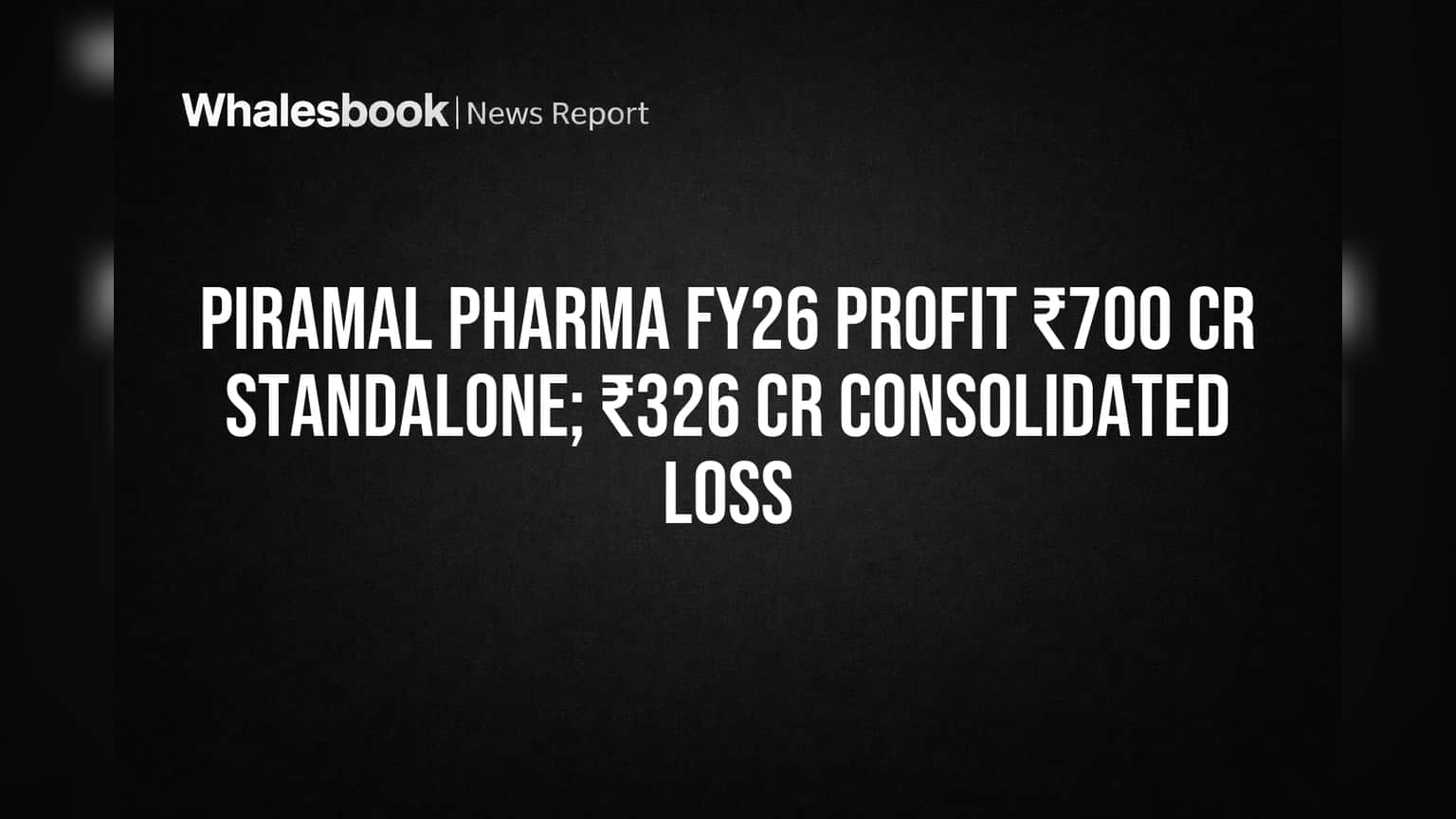


Piramal Pharma Reports ₹700 Cr Standalone Profit, ₹326 Cr Consolidated Loss for FY26
Piramal Pharma Limited (PPL) has announced its audited financial results for the fiscal year ended March 31, 2026. The company reported a standalone profit after tax (PAT) of ₹700.01 crore on a total income of ₹5,444.74 crore.
In contrast, its consolidated operations, which cover global business segments, registered a net loss of ₹325.94 crore for the fiscal year. This consolidated loss was incurred against a total income of ₹9,082.38 crore.
The divergence between the strong standalone profit and the consolidated loss highlights varying performance across Piramal Pharma's global business units. For the previous fiscal year, FY25, the company reported a consolidated net loss of ₹1,027.48 crore on total income of ₹7,391.02 crore. The reported ₹700 crore standalone profit for FY26 marks a significant improvement compared to previous standalone performances. The company operates in a competitive pharmaceutical sector, facing players like Divi's Laboratories, Laurus Labs, and Syngene International.
Piramal Pharma operates across three key segments: Contract Development and Manufacturing Organization (CDMO), Consumer Healthcare, and Pharma Solutions, offering integrated services for drug development and manufacturing.
In parallel with the financial results, the company's board approved the re-appointment of several key directors for multi-year terms. Ms. Nandini Piramal will continue to serve as Executive Director and Chairperson, ensuring leadership continuity.
The company also announced a formal change in its registered office address, effective April 30, 2026. This administrative update marks a shift in its corporate headquarters.
Investors will be closely watching management's commentary to understand the drivers behind the consolidated loss in relation to the robust standalone profit. Key areas to track include future guidance from the company for FY27 performance expectations and the operational transition related to the new registered office. Shareholder voting on the re-appointment of directors is also a point of focus.