 Whalesbook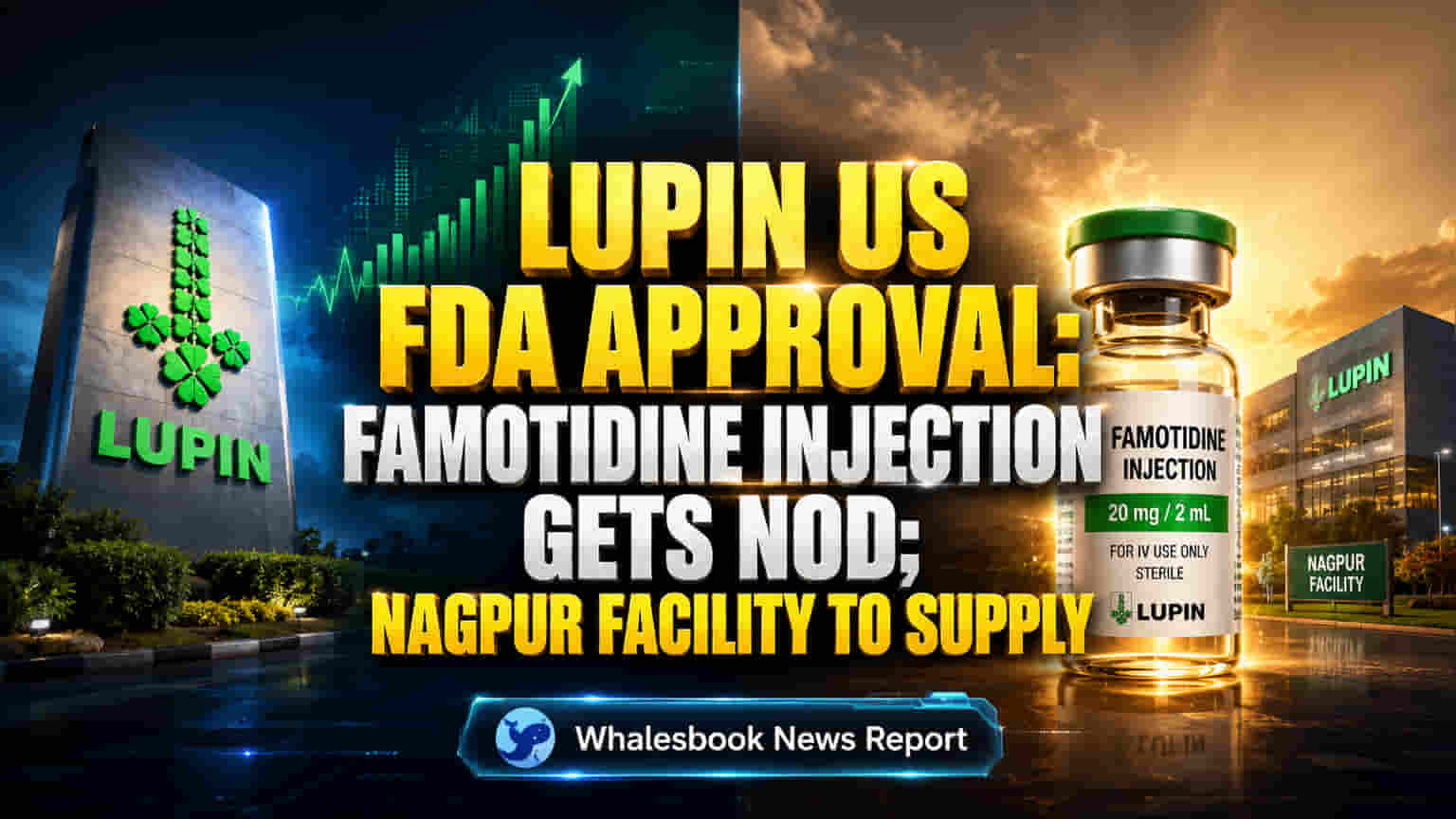


Lupin Secures US FDA Approval for Famotidine Injection
Lupin Limited has announced it has received approval from the U.S. Food and Drug Administration (FDA) for its Famotidine Injection, USP. This clearance allows the company to market the intravenous medication in the United States.
The approval covers Abbreviated New Drug Applications (ANDAs) for single-dose vials. Famotidine Injection is prescribed for hospitalized patients managing pathological hypersecretory conditions or intractable ulcers that require intravenous treatment.
Manufacturing of the Famotidine Injection will occur at Lupin's facility in Nagpur, India. This development validates the Nagpur plant's adherence to stringent international regulatory standards, including those set by the US FDA, further enhancing its standing for regulated market supplies.
The US FDA nod grants Lupin market access for its Famotidine Injection in a significant global pharmaceutical market. The annual market for this specific drug is estimated at USD 8.7 million. This represents an expansion for Lupin's injectable product portfolio, particularly in the higher-value formulations segment.
Lupin has a proven track record of obtaining US FDA approvals for various pharmaceutical products, including complex injectables. The company has strategically focused on strengthening its injectable pipeline and U.S. market presence through targeted regulatory submissions. Its Nagpur manufacturing facility is a key component of Lupin's global supply chain and holds approvals from major international regulatory bodies.
The U.S. market for Famotidine Injection is competitive, with companies like Sun Pharmaceutical Industries Ltd, Dr. Reddy's Laboratories Ltd, and Cipla Ltd also active in generics and complex formulations. These established players with strong U.S. footprints shape the competitive landscape for Lupin's new injectable product.
Lupin may face challenges in capturing market share due to existing competition and the pricing pressures inherent in the U.S. generics sector. Ensuring consistent product availability will depend on avoiding potential supply chain disruptions or manufacturing issues. Ongoing adherence to strict US FDA regulatory standards at the Nagpur site remains critical for sustained success.