 Whalesbook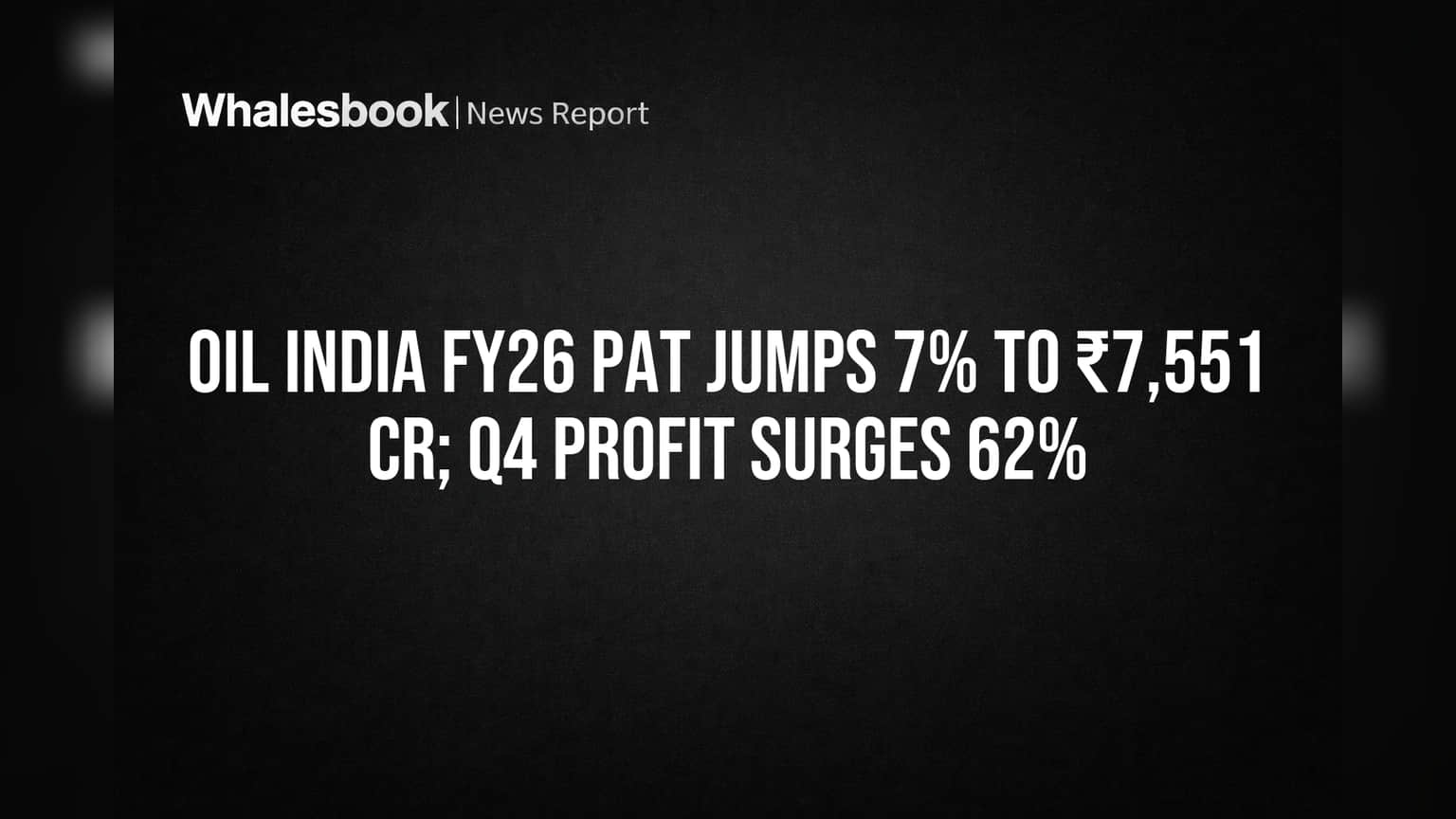


Key Figures and Operational Drivers
Oil India Limited (OIL) announced its audited financial results for FY26, showcasing robust year-on-year growth. Consolidated Profit After Tax (PAT) climbed by 7% to ₹7,551 crore, with the fourth quarter (Q4 FY26) seeing a particularly strong 62% surge to ₹2,424 crore. These results were driven by record operational achievements, including the highest daily crude oil production in a decade, and significant milestones in drilling and workover activities throughout the fiscal year. Crude oil price realization also increased in Q4 FY26 to USD 77.89 per barrel, up from USD 74.46 per barrel in the same quarter last year. Standalone PAT for Q4 FY26 rose to ₹1,790 crore from ₹1,591 crore. The company's subsidiary, Numaligarh Refinery Limited (NRL), contributed positively with a PAT of ₹3,057 crore for FY26.
Significance of Results
These results highlight OIL's operational efficiency and its success in increasing production and replacing reserves, which is vital for India's energy security. The record drilling and production figures point to effective exploration and development efforts. The company's consistent profitability, even with market fluctuations, shows its strength in leveraging favorable market conditions and operational improvements. A Reserve Replacement Ratio above 1 confirms that the company is successfully replenishing its oil and gas reserves.
Context: India's Energy Goals
India's push for energy security is increasing the focus on domestic oil and gas production. Government policies like the Hydrocarbon Exploration Licensing Policy (HELP) encourage exploration and production firms like OIL to increase output. OIL has been strategically investing in exploration and development, especially in its North-Eastern region, to find new reserves and maintain production. Its subsidiary, Numaligarh Refinery Limited (NRL), plays a key role in the downstream sector, adding value across the supply chain.
Investor Takeaways
Shareholders can anticipate a recommended final dividend of ₹1.00 per equity share. The company's financial position is strengthened by this increased profitability and revenue. These operational achievements demonstrate OIL's growing capabilities in exploration and production, suggesting potential for future reserve growth and sustained output.
Key Risks
Key risks include volatility in global crude oil and natural gas prices, and potential impacts from geopolitical instability on energy supply chains. Changes in government policies or regulations for the hydrocarbon sector also pose a risk, alongside the execution challenges of meeting ambitious exploration and development targets.
Performance vs. Peers
Oil India Limited's Q4 FY26 PAT growth of 62% significantly outpaced its primary peer, ONGC. For comparison, ONGC reported a 22% year-on-year increase in its Q4 FY25 PAT to ₹10,132 crore, making OIL's percentage jump notably higher. Looking at the full fiscal year, ONGC's PAT declined 16% to ₹42,767 crore in FY25. Against this backdrop, OIL's 7% growth for its FY26 stands out as a stronger relative performance within the E&P segment.
Looking Ahead
Investors will be watching future exploration success rates and reserve replacement pace, alongside sustained production levels and the efficiency of drilling operations. The company's response to evolving global energy prices and demand trends will also be key. Additionally, progress on governmental energy transition policies and the performance and expansion plans of key subsidiaries like NRL will be important factors.