 Whalesbook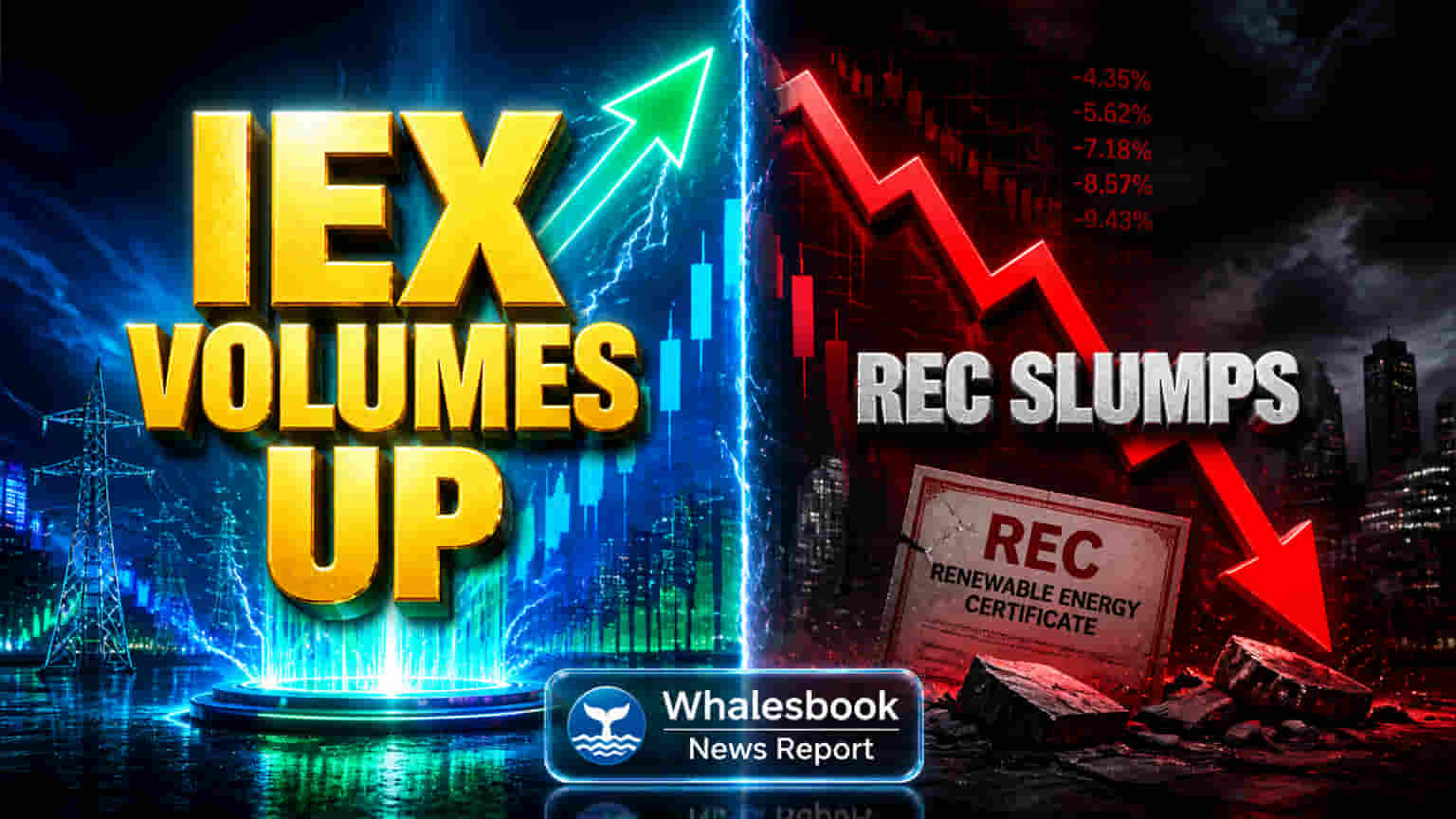


IEX Reports Strong April Electricity Volumes Amid REC Market Dip
Indian Energy Exchange (IEX) announced a notable 16.6% year-on-year increase in its April 2026 electricity traded volume, reaching 12,341 Million Units (MU). This expansion was significantly driven by a robust 30.2% surge in its Real-Time Market (RTM) segment, which recorded its highest single-day volume. In stark contrast, the Renewable Energy Certificates (RECs) segment experienced a substantial 59.4% year-on-year drop, with volumes falling to 1.18 lakh certificates.
Key Market Dynamics
The Day-Ahead Market (DAM), another key segment, also posted a modest 8.7% year-on-year increase, totaling 4,624 MU. This mixed performance, with strong electricity trading offset by a sharp decline in RECs, highlights segment-specific market dynamics. The RTM's strength indicates growing demand for flexible and real-time electricity procurement, a core competency for IEX and crucial for grid balancing. Conversely, the steep fall in RECs suggests potential headwinds in the renewable energy certificate market, raising questions about revenue diversification.
Market Background and Trends
IEX, India's leading energy exchange, has built its position on market liberalization enabling transparent electricity trading. The REC market, however, often faces fluctuations influenced by evolving government policies and shifts in demand-supply balances, a pattern IEX has navigated before.
Trading Environment and Price Factors
April's trading environment was also marked by volatility in Day-Ahead Market prices. On several days, prices dipped below Rs. 3.5 per unit, attributed to unseasonal rainfall. This price instability can affect market participant sentiment and potentially impact the overall trading revenue mix, particularly if the decline in REC volumes continues.
Competitive Landscape
IEX's closest listed peer is Power Exchange India Limited (PXIL). While both companies operate in electricity trading, IEX maintains a considerably larger market share. The growth reported by IEX stands out against broader industry trends, reinforcing its dominant position in the electricity trading space.
Outlook and Future Watch
Market observers will be watching upcoming REC trading sessions scheduled for May 13 and May 27, 2026, for any signs of a trend reversal. Continued momentum in the RTM and DAM, alongside broader electricity demand, will also be key indicators for IEX's future performance.