 Whalesbook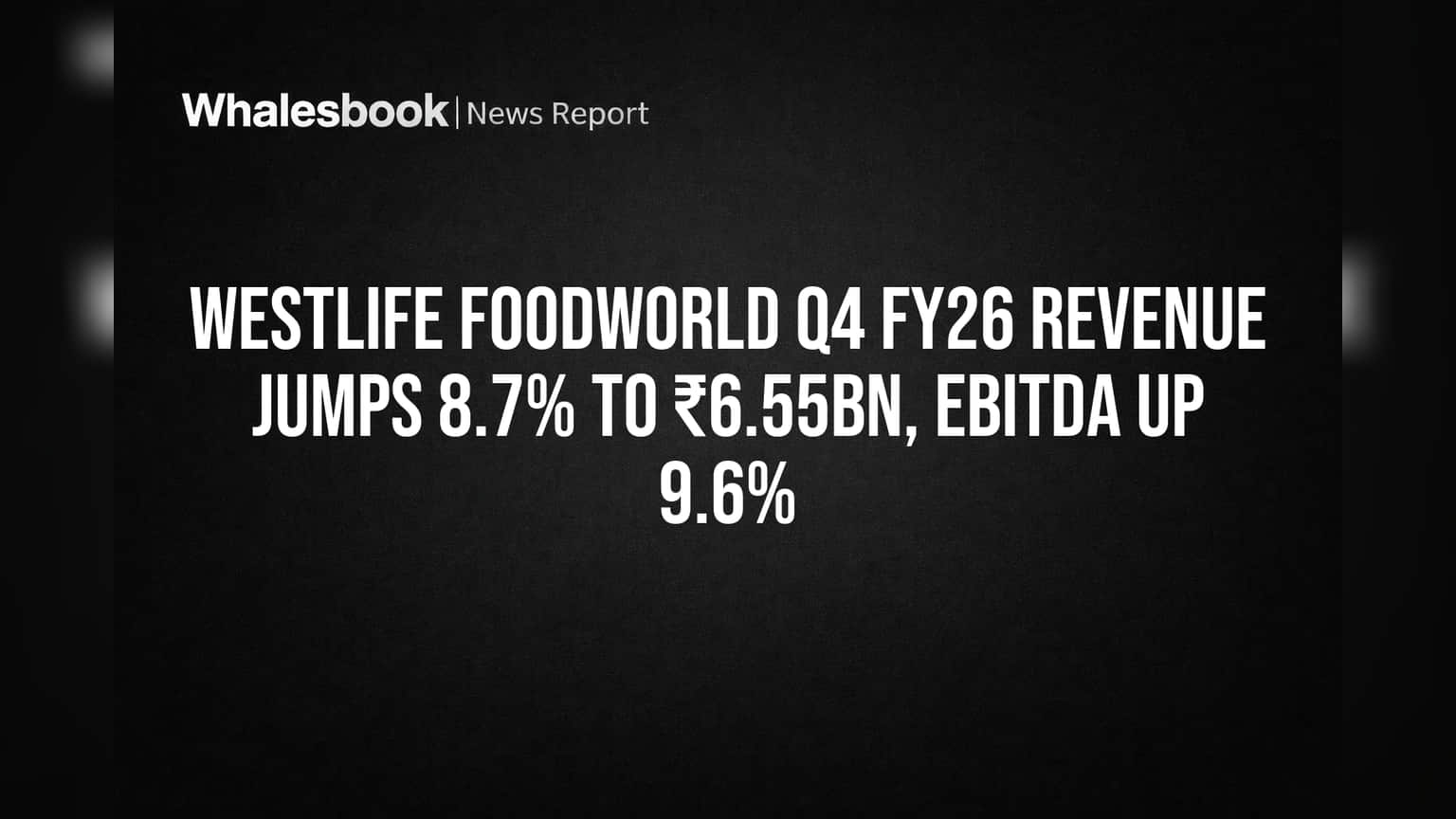


Westlife Foodworld Reports Strong Q4 FY26 Growth
Revenue ₹6.55 billion (Q4 FY26), up 8.7% YoY; Operating EBITDA ₹870 million, up 9.6% YoY. Growth was sustained by cost optimisation and strong guest numbers, though inflationary pressures remain a concern.
Key Financials and Expansion
Westlife Foodworld reported steady Q4 FY26 results, showcasing a year-over-year revenue increase of 8.7% to ₹6.55 billion. Operating EBITDA followed suit, growing 9.6% to ₹870 million. The company achieved a 1.5% Same Store Sales Growth (SSSG) for the quarter.
These results were fueled by effective cost management and strong guest traffic. Network expansion remained a key highlight, with 21 new restaurants added during Q4 FY26. This brings the total outlet count to 478 across 78 cities. Cash Profit After Tax (PAT) was ₹487 million, or 7.4% of sales.
Strategic Growth Drivers
The steady expansion of its store count signals a clear growth trajectory for Westlife Foodworld. The company is steadily moving towards its ambitious target of 580-630 restaurants by 2027.
Digital channels are a major contributor, accounting for about 76% of sales. This broad digital reach enhances customer retention and provides predictability in demand. Focus on value-driven initiatives, such as ₹99 meals, merchandise, and McCafe subscriptions, aims to build stronger customer habits and loyalty.
Company Background
Westlife Foodworld is the master franchisee for McDonald's restaurants in India, operating primarily in West and South India. The company has pursued an aggressive expansion strategy, continually aiming to grow its restaurant footprint. This growth is supported by a strong focus on digital channels, including its mobile app and delivery services, to drive sales and customer engagement.
Future Outlook
Shareholders can anticipate ongoing network expansion, with planned openings for FY27 and a clear path to achieving its 2027 expansion targets. Digital sales contribution is expected to grow, reinforcing customer loyalty and providing stable revenue streams. Value initiatives are designed to attract a wider customer base and embed McDonald's into daily consumer habits, potentially boosting same-store sales.
Challenges Ahead
The company faces near-term volatility from LPG prices and inflation across key commodities, which could affect margins. Performance reflects ongoing external pressures and evolving market dynamics typical of the fast-paced Quick Service Restaurant (QSR) sector.
Competitive Landscape
Competitors like Jubilant Foodworks (Domino's, Popeyes) and Sapphire Foods India (KFC, Pizza Hut) are also focused on aggressive store network expansion and bolstering digital sales channels. These competitors are also managing commodity price fluctuations and aiming to capture growth in India's expanding QSR market.
Digital Engagement and Efficiency
Monthly Active Users stood at 3.5 million as of Q4 FY26, indicating strong digital engagement. Cumulative app downloads reached 52 million by Q4 FY26, reflecting a broad digital user base. Cash PAT Margin was 7.4% of sales in Q4 FY26, showing efficient operations.
Investor Focus
Investors will likely monitor progress towards the medium-term target of achieving 580–630 restaurants by 2027. Tracking the continued growth and contribution of digital channels to overall sales and profitability will also be key. Observing the performance of new stores and their ability to meet profitability targets is also important.