 Whalesbook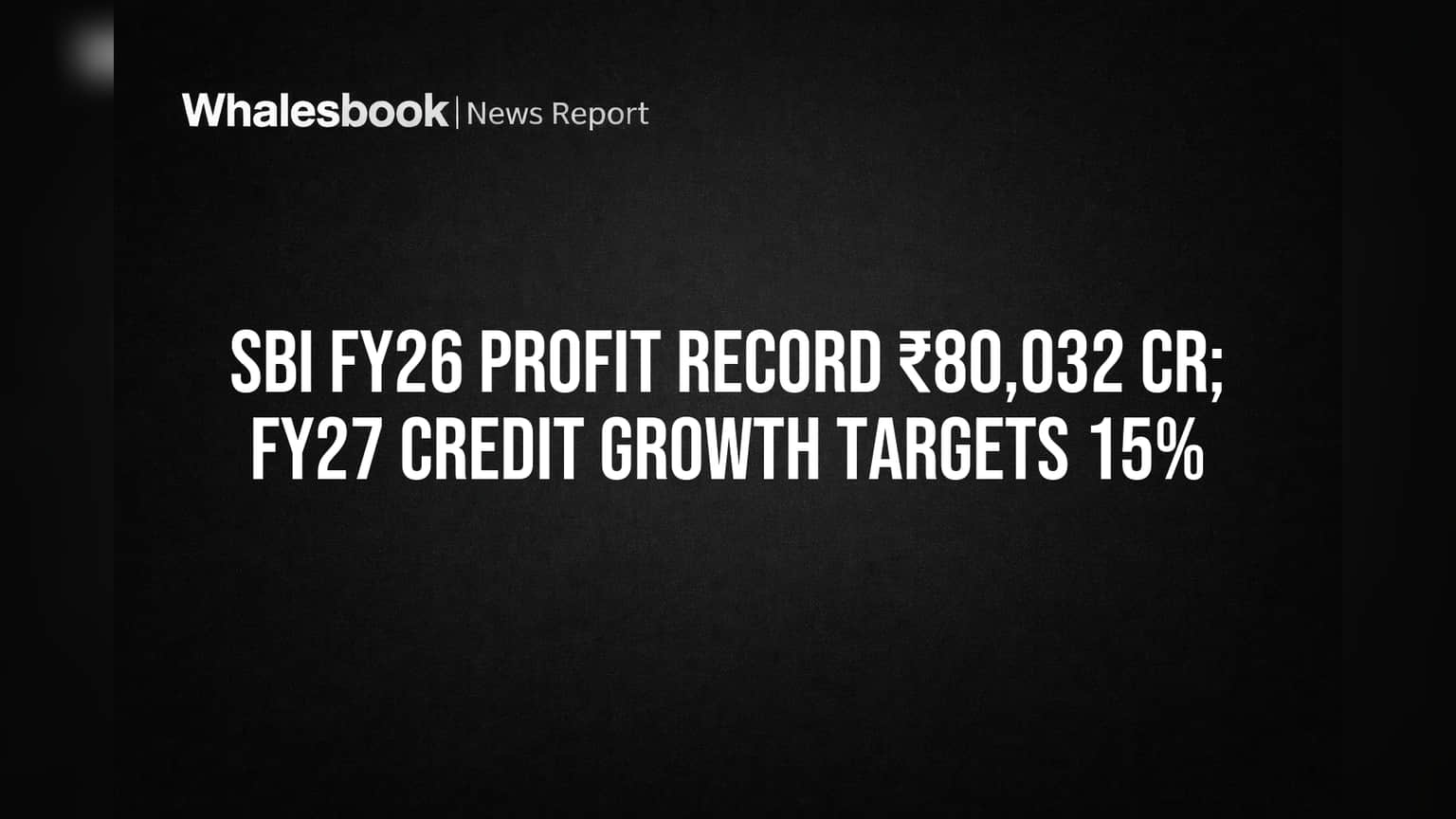


SBI Achieves Record Profit, Sets Ambitious Growth Targets
State Bank of India announced a record net profit of ₹80,032 crore for the fiscal year 2026, marking a 12.88% increase from the previous year. The bank's total business volume grew to over ₹109 trillion, with its balance sheet size reaching nearly ₹76 trillion.
Key Financial Results
SBI reported its highest-ever annual profit of ₹80,032 crore for the fiscal year ending March 2026, representing a significant 12.88% rise year-on-year.
The bank's total business volume expanded to over ₹109 trillion. Its balance sheet size approached ₹76 trillion, demonstrating its substantial scale.
Deposit growth remained strong at 11.03%, boosted by a solid performance in retail term deposits (+14.77%) and continued double-digit growth in savings accounts (+10.6%).
Asset quality showed further improvement. Gross Non-Performing Assets (GNPA) declined by 33 basis points to 1.49%, and Net NPAs fell by 8 basis points to 0.39%.
Significance for Investors
This record profit indicates strong operational performance and effective cost management by India's largest lender.
The improvement in asset quality reduces risk and boosts profitability.
The guidance for fiscal year 2027 signals a continued focus on growth, particularly in the retail, agriculture, and small and medium-sized enterprise (SME) segments.
Strategic Foundation
SBI has been undertaking a multi-year effort to strengthen its balance sheet and enhance its digital capabilities.
The YONO platform has become a key element of its retail strategy, driving customer acquisition and engagement.
The bank has also actively worked to reduce legacy non-performing assets, contributing to its current healthy asset quality metrics.
Progress has been made on plans to unlock value through subsidiary listings, such as its Asset Management Company (AMC).
Key Developments and Future Moves
Shareholders can anticipate benefits from record profitability and sustained dividend prospects.
The bank's strategy to capture 1% market share annually in each district could lead to an expanded customer base and increased business volume.
The planned listing of SBI AMC in fiscal year 2027 is expected to unlock value and provide capital for future growth initiatives.
A focus on shifting corporate loans to the Marginal Cost of Funds based Lending Rate (MCLR) is anticipated to support Net Interest Margins (NIMs) in the coming period.
Investment in the 'CHAKRA' initiative highlights SBI's commitment to financing new-age, high-growth sectors like green hydrogen and semiconductors.
Potential Challenges Ahead
Systemic technology risks are growing, particularly concerning AI-driven cybersecurity threats.
Geopolitical events and climate-related disruptions could impact short-term forecasts.
SME segments in some areas face pressure from energy affordability issues, which may affect asset quality.
Comparing SBI to Peers
SBI's Gross NPA ratio stood at 1.49% for FY26. In comparison, private sector peers like HDFC Bank and ICICI Bank typically had lower Gross NPAs, around 1.1% to 1.2%.
Other public sector banks, such as PNB and Bank of Baroda, reported higher GNPA ratios, often exceeding 4%.
SBI's robust deposit growth and digital reach through YONO are significant competitive advantages.
Performance Snapshot
- Net profit reached ₹80,032 crore for FY26.
- Gross NPA ratio was 1.49% at the end of Q4 FY26.
- Net NPA ratio was 0.39% at the end of Q4 FY26.
- Domestic Net Interest Margin (NIM) is guided to stay above 3% for FY27.
- Credit growth is targeted at 13-15% for FY27.
Monitoring Future Progress
- The execution of the strategy to gain 1% annual market share in districts.
- The bank's ability to manage NIMs amidst evolving interest rate scenarios and loan mix.
- The timeline and valuation for the planned listing of SBI AMC in FY27.
- The effectiveness of initiatives like 'CHAKRA' in funding sunrise sectors and generating returns.
- Management's commentary on technology and geopolitical risks and their mitigation plans.
- The bank's transition to the Expected Credit Loss (ECL) provisioning framework in 2027.