 Whalesbook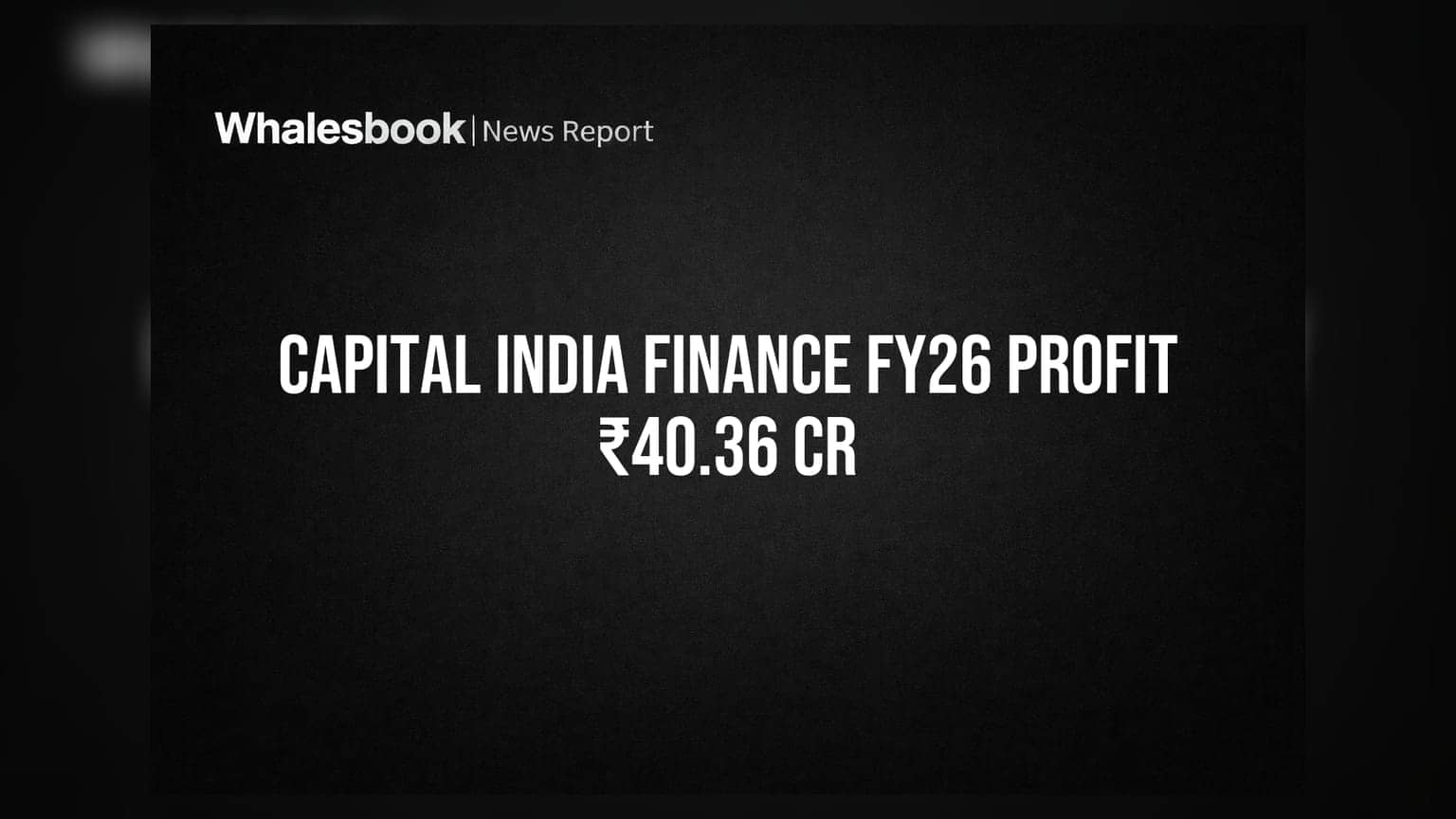


Capital India Finance FY26 Results
Standalone Profit After Tax: ₹40.36 crore
Consolidated Profit After Tax: ₹30.89 crore
What Happened
Capital India Finance Limited announced its FY26 standalone financial results, reporting a Profit After Tax (PAT) of ₹40.36 crore on total revenue of ₹229.67 crore. The company also divested its housing finance subsidiary, Capital India Home Loans Limited, for ₹267 crore. This move aims to sharpen the company's focus on its core MSME lending business.
Assets Under Management (AUM) grew 22% year-on-year to ₹1227.37 crore. Disbursements surged 62% year-on-year to ₹753.54 crore for the fiscal year. As of March 31, 2026, the company's Capital Adequacy Ratio (CAR) was 40.99%, with Net Non-Performing Assets (NPA) at 1.32%.
Strategic Pivot Bolsters MSME Focus
The divestment of the housing finance arm signals a strategic shift by Capital India Finance. By selling this business, the company intends to concentrate resources on expanding its MSME and granular lending operations. This clearer focus, combined with strong growth in AUM and disbursements, suggests potential for improved efficiency and profitability. The company also expanded its branch network to 46, aiming to boost customer outreach.
Turnaround from Prior Year
In the previous fiscal year, FY25, Capital India Finance reported a consolidated loss after tax of ₹10.22 crore. The FY26 results show a turnaround, with a consolidated PAT of ₹30.89 crore. This improvement is partly due to the performance of its subsidiary, Rapipay Fintech Pvt. Ltd, which reported revenue of ₹338.70 crore and positive EBITDA of ₹6.89 crore, while reducing its net loss.
Business Model Reshaped
The divestment and intensified focus on MSME lending are expected to reshape the company's business model. Expanding the distribution network is a key step toward greater market penetration in the MSME segment. Management aims to build a scalable and disciplined lending franchise.
Potential Risks
Risks to watch include earnings fluctuations, challenges in managing rapid growth, intense competition in financial services, and broader economic conditions in India. The company must also manage attracting and retaining skilled staff, evolving government policies, and regulations. Interest rate changes and fiscal costs are also inherent risks.
Key Metrics
- Total Debt Raised (FY26): ₹600 crore
- Branches: Expanded to 46 from 29 (FY25)
Next Steps for Investors
Investors will monitor the execution of the MSME lending strategy and the performance of the consolidated entity, particularly Rapipay, following these strategic changes.