 Whalesbook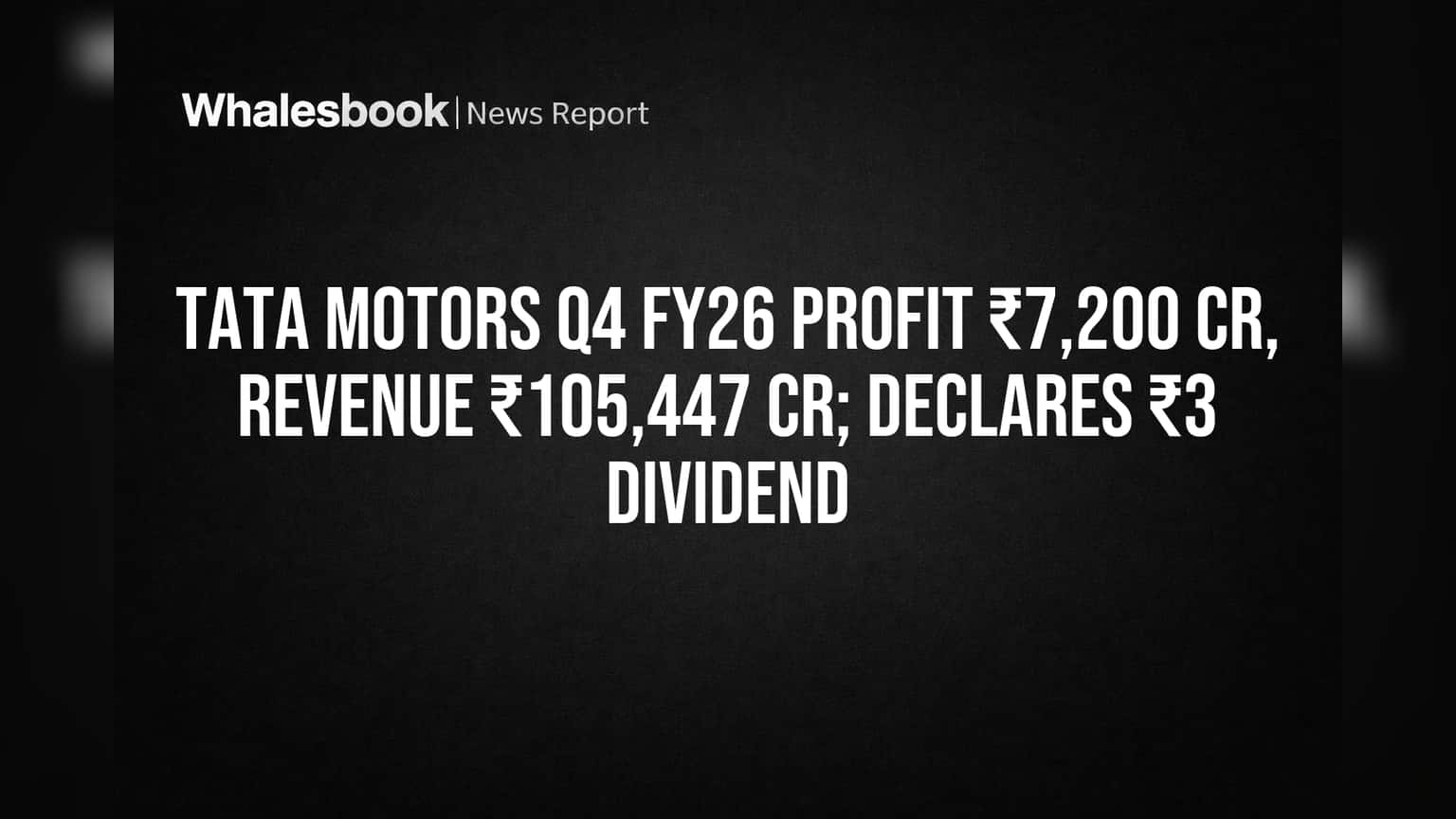


Tata Motors Reports Strong Q4 FY26 Results
Tata Motors released its audited financial results for the fourth quarter and the full fiscal year ending March 31, 2026. The company achieved a consolidated revenue of ₹105,447 Cr for the fourth quarter, marking a 7.2% increase compared to the same period last year. Profit Before Tax (PBT) for the quarter stood at ₹7,200 Cr.
For the full fiscal year FY26, consolidated revenue saw a decrease of 8.3% to ₹335,582 Cr. Despite this annual decline, the company demonstrated financial strength by generating robust consolidated free cash flows of ₹11,400 Cr during the fourth quarter. Consolidated Net Debt at the end of FY26 was ₹30,700 Cr.
Strategic Focus and Shareholder Value
The company's strong Q4 performance reflects effective strategy execution, particularly within the domestic passenger vehicle segment, which showed notable strength. Management's commitment to profitable growth and implementing structural cost reductions aims to improve margins.
The board recommended a final dividend of ₹3.00 per equity share, pending shareholder approval at the upcoming Annual General Meeting (AGM) on July 8, 2026. The dividend is expected to be disbursed by July 14, 2026. This payout signals management's confidence in the company's financial health and its ability to generate value for shareholders.
Turnaround Efforts and Market Context
Tata Motors has been strategically investing in its Jaguar Land Rover (JLR) business, focusing on brand revitalization and operational improvements. The company is also expanding its electric vehicle (EV) offerings in the Indian market to tap into future growth opportunities.
The global automotive industry faced a challenging FY26, characterized by supply chain disruptions and price pressures. Tata Motors has prioritized structural cost reduction programs across its operations to boost profitability and competitiveness.
Financial Flexibility and Outlook
The generation of strong free cash flow provides Tata Motors with greater financial flexibility. This can support future investments, debt management, and potential new opportunities. Continued efforts to strengthen JLR's market position are expected to drive its global recovery.
Potential Risks Ahead
Global geopolitical events and changing regulatory environments pose ongoing risks. These factors can impact supply chains and commodity prices. The sector remains susceptible to external shocks, as seen in past challenges like semiconductor shortages and volatile raw material costs.
Competitive Landscape
In the domestic market, Tata Motors faces strong competition. Maruti Suzuki India Ltd remains the largest player in passenger vehicles, leveraging its extensive sales network. Mahindra & Mahindra Ltd is another significant competitor, performing well in the SUV segment and across various vehicle categories.
Looking Ahead
Investors will monitor shareholder approval of the final dividend at the AGM. Key management focus areas will include execution plans for navigating supply chain and geopolitical challenges. Performance updates for the domestic business and JLR in upcoming quarters will also be closely watched.