 Whalesbook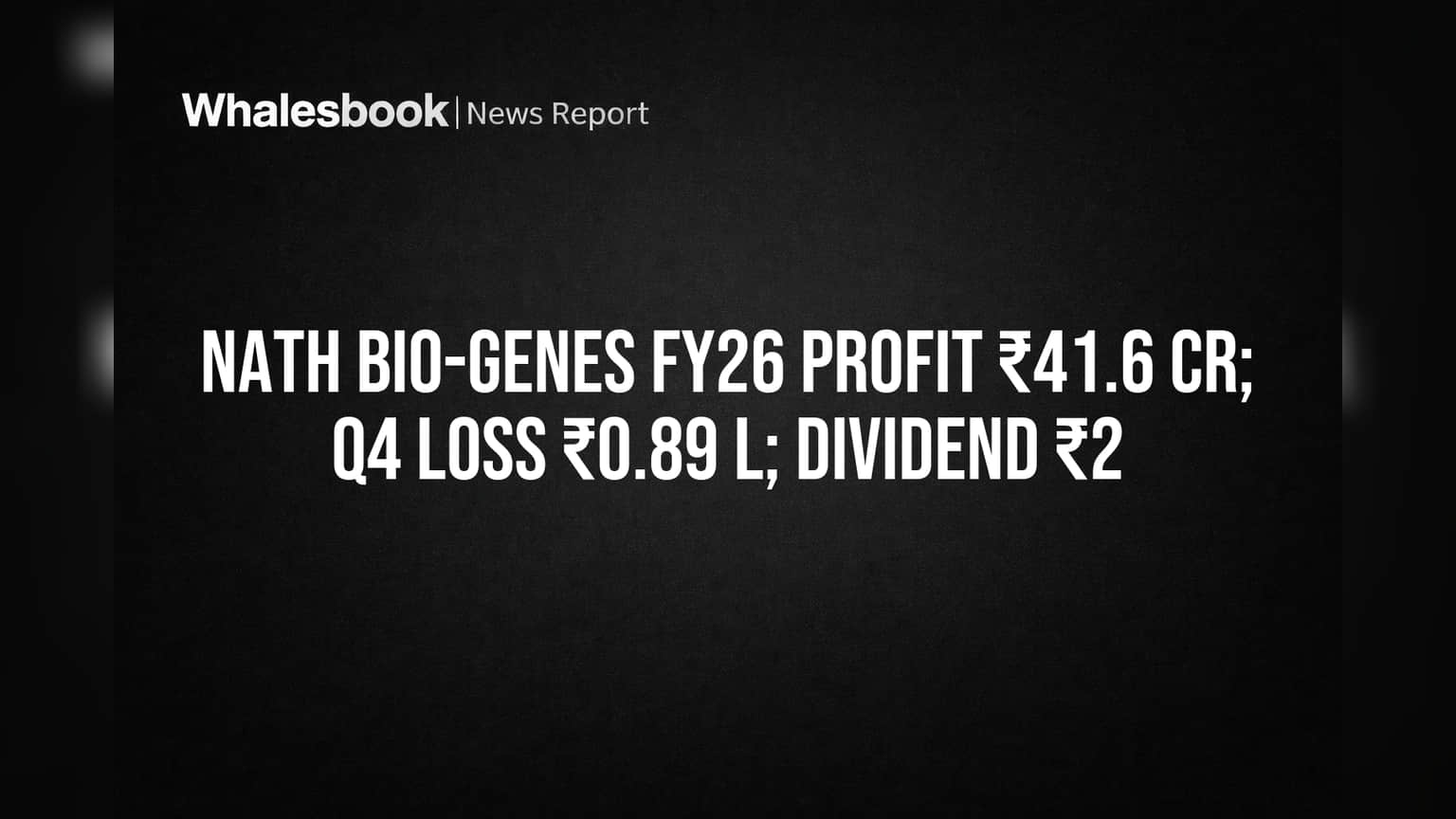


Nath Bio-Genes Reports Strong Annual Profit, But Q4 Loss and Risks Emerge
Nath Bio-Genes (India) Ltd announced a full-year consolidated net profit of ₹4,163.03 Lakhs (₹41.63 Cr) for the fiscal year ending March 31, 2026. This annual performance stands in contrast to a net loss of ₹(0.89) Lakhs reported for the latest quarter.
Annual and Quarterly Financials
For the full fiscal year ending March 31, 2026, Nath Bio-Genes India Ltd reported a consolidated net profit of ₹4,163.03 Lakhs (₹41.63 Cr) on total income of ₹44,510.15 Lakhs (₹445.10 Cr). This represents a significant 21.98% year-on-year growth in consolidated revenue.
In contrast, the fourth quarter (January-March 2026) showed a marginal consolidated net loss of ₹(0.89) Lakhs, despite total income reaching ₹5,159.28 Lakhs.
On a standalone basis, the company posted a net profit of ₹378.80 Lakhs for the quarter and ₹4,442.57 Lakhs for the full year.
Investor Focus: Growth Amid Concerns
The robust annual financial results underscore the company's capacity to expand its operations. A recommended dividend of ₹2 per share signals management's optimism about future prospects.
However, the quarterly loss, coupled with substantial contingent liabilities such as disputed tax dues, introduces elements of uncertainty for investors. Additionally, increasing inventory levels require careful monitoring regarding working capital management and sales efficiency.
Company Overview
Nath Bio-Genes (India) Ltd operates in the competitive agricultural sector, focusing on the manufacturing and marketing of hybrid seeds for field crops and vegetables. The reported 21.98% year-on-year growth in consolidated revenue for FY2026 reflects an expansionary phase for its business.
Key Developments and Outlook
Shareholders are set to receive a dividend payout of ₹2 per share, pending necessary approvals.
The company's resolution process for its disputed tax dues will likely face increased scrutiny.
Management's attention is expected to be directed towards optimizing inventory levels and enhancing sales efficiency.
Sustaining consolidated profitability consistently will be crucial for the company moving forward.
Potential Risks
Nath Bio-Genes faces disputed income tax dues totaling ₹1,908.97 Lakhs (₹19.09 Cr) for Assessment Year 2024-25, a matter currently before the Commissioner of Income Tax (Appeals).
Consolidated inventories have significantly increased to ₹45,054.76 Lakhs (₹450.55 Cr) as of March 31, 2026, up from ₹33,801.59 Lakhs in the prior year.
The occurrence of a consolidated net loss of ₹(0.89) Lakhs in the recent quarter warrants close monitoring for any signs of recurring operational challenges.
Industry Landscape
The hybrid seeds market is competitive, with players like Kaveri Seed Company and Rasi Seeds operating under similar industry dynamics. For context, Kaveri Seed Company reported revenues of ₹1,083 crore and profits of ₹198 crore in FY23. Nath Bio-Genes' FY26 consolidated revenue reached ₹445 crore.
Key Financial Figures
- Q4 FY26 Standalone: Total Income: ₹4,569.36 Lakhs; Net Profit: ₹378.80 Lakhs
- Q4 FY26 Consolidated: Total Income: ₹5,159.28 Lakhs; Net Loss: ₹(0.89) Lakhs
- FY26 Standalone: Total Income: ₹43,159.72 Lakhs; Net Profit: ₹4,442.57 Lakhs
- FY26 Consolidated: Total Income: ₹44,510.15 Lakhs; Net Profit: ₹4,163.03 Lakhs
- Inventories (Consolidated): ₹45,054.76 Lakhs (Mar 31, 2026); ₹33,801.59 Lakhs (Mar 31, 2025)
- Disputed Income Tax Dues (AY 2024-25): ₹1,908.97 Lakhs (₹19.09 Cr)
- Provision for Schemes (Adjusted in Q4 FY26): ₹900.00 Lakhs
Next Steps for Investors
Investors will be closely watching the outcome of the disputed income tax dues before the Commissioner of Income Tax (Appeals).
Management's strategies for addressing and reducing the elevated inventory levels will be a key focus.
Performance in the first quarter of fiscal year 2027 (Q1 FY27) will be critical to determine if the recent quarterly loss was an isolated event.
Updates on research and development initiatives or new product launches are also anticipated.
Management commentary regarding the dividend policy and identified future growth drivers will be of interest.