 Whalesbook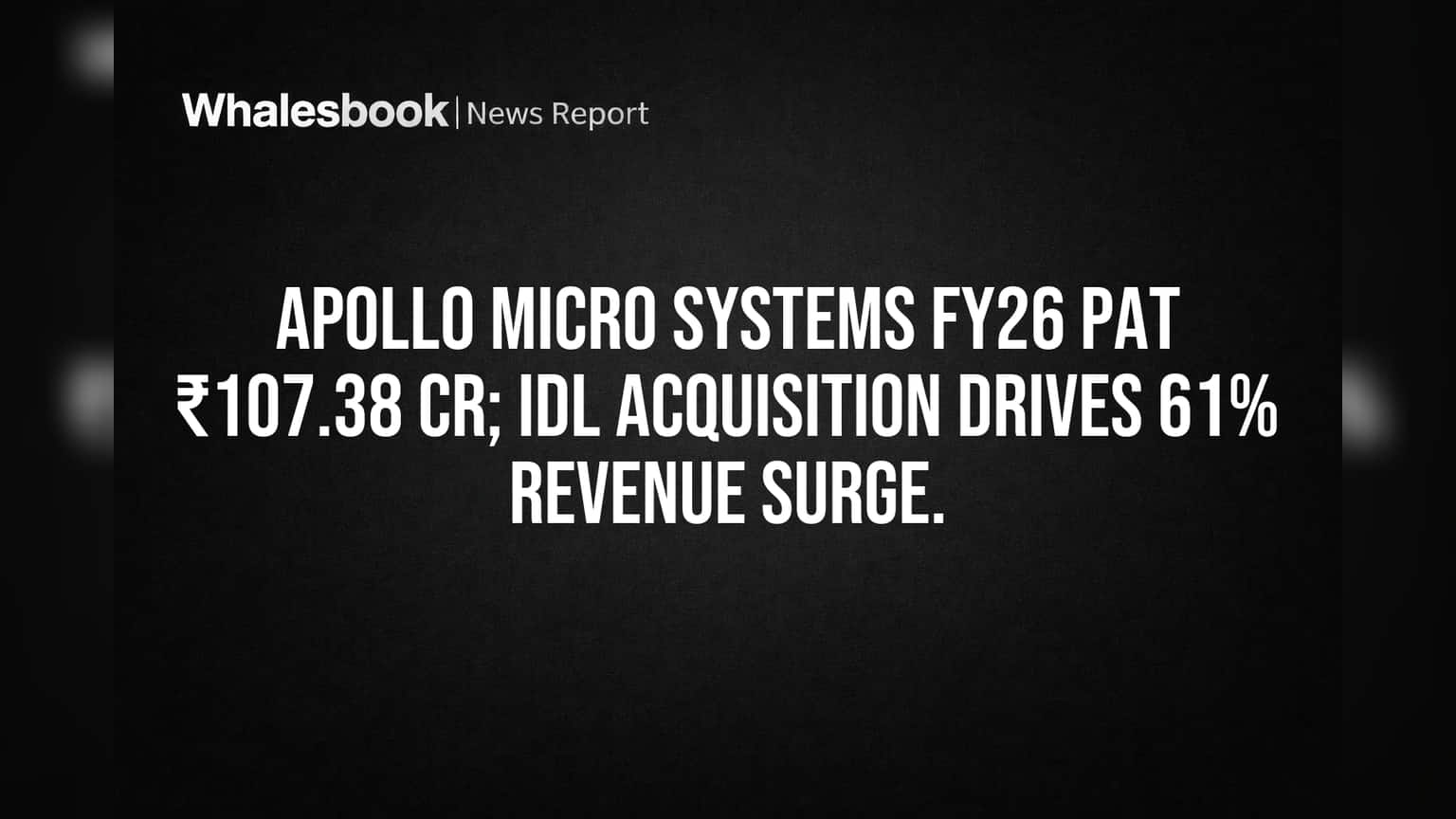


Apollo Micro Systems Sees Strong FY26 Growth Post-Acquisition; Financial Health Under Scrutiny
Apollo Micro Systems Ltd. announced strong financial results for the fiscal year ended March 31, 2026. The company reported consolidated revenue of ₹910.60 crore, a 61.18% increase year-over-year, driven significantly by its acquisition of IDL Explosives Limited. Profit After Tax (PAT) also saw a substantial rise of 90.53%, reaching ₹107.38 crore. This growth marks a new phase for the company, though investors are closely examining its increased debt levels, inventory, and negative operating cash flow.
The Impact of the IDL Acquisition
The strategic acquisition of a 100% stake in IDL Explosives Limited during FY26 has substantially expanded Apollo Micro Systems' operational scale and diversified its business into explosives manufacturing, strengthening its position within the defence sector. This integration means higher revenue potential, but it also comes with increased financial leverage and significant working capital needs. Management's focus is expected to shift towards integrating IDL, optimizing cash flow, and managing debt.
Company Background
Apollo Micro Systems specializes in advanced micro-electronics, electro-mechanical parts, and systems, primarily serving the defence, space, and aviation industries. Prior to the IDL acquisition, the company had been building a strong order book from defence clients, indicating consistent demand for its core products.
Key Financial Concerns
Despite the impressive revenue and profit growth, Apollo Micro Systems faces several financial challenges. Consolidated net cash flow from operations was negative ₹129.76 crore for the fiscal year. Inventory levels surged to ₹795.29 crore, and total consolidated borrowings climbed to over ₹532.41 crore. High trade receivables, amounting to ₹481.32 crore, also affect the company's cash conversion cycle.
Comparing Performance and Margins
Compared to industry peers, Apollo Micro Systems' FY26 consolidated PAT margin of approximately 11.8% is lower than Data Patterns (16.3% in FY24) and Paras Defence (13.2% in FY24). While the company has achieved rapid revenue growth, its profitability margins and financial health indicators like debt and cash flow will require close monitoring against sector benchmarks.
Future Outlook and Investor Focus
Looking ahead, investors will focus on the successful integration of IDL Explosives and the realization of expected synergies. Key indicators to watch include improvements in operating cash flow, management's progress in reducing debt, and the efficiency of managing high inventory and receivables. Future order inflows and the performance of the newly acquired business segment will also be critical.